

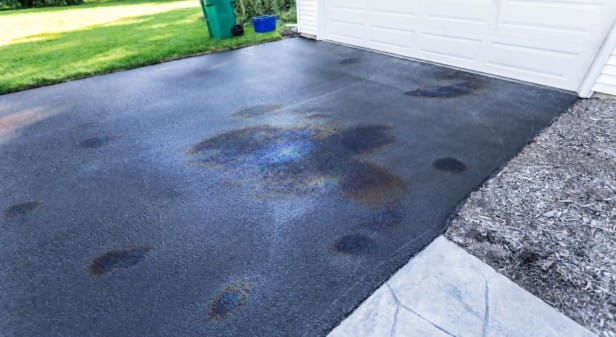
A dark patch under the car is one of the most common driveway complaints. A slow oil leak, a spilled can of gas, or a fumbled lawn mower refill can leave a stain that looks permanent. The good news is that most of these stains can be reduced, and many can be prevented.
There is also a reason to act fast. Asphalt is made with a petroleum based binder. Oil and fuel can soften that binder over time, which breaks the surface down faster than weather alone. A stain is not just a cosmetic problem. It can be the start of a weak spot.
This guide covers how to clean fresh and old stains, what to avoid, and how to keep your driveway from getting stained again.
Why Oil and Gas Harm Asphalt
Asphalt is a mix of stone and a sticky binder that holds everything together. That binder is petroleum based. Other petroleum products, such as motor oil, gasoline, and diesel, can dissolve or soften it.
When fluid soaks in, the surface can turn soft and tacky. Small pieces of stone may loosen. Over time, the spot can pit, crumble, or wear faster than the pavement around it.
Fuel is usually the harsher of the two. Gas and diesel can soften asphalt quickly, and a larger spill may leave the surface rough or damaged. Oil tends to stain and slowly weaken the surface, especially where a car drips in the same spot day after day.

What You Need Before You Start
Gather your supplies first. Most of them are already in a garage.
- Absorbent material such as cat litter, sawdust, or cornstarch
- A stiff bristle brush, not a wire brush
- A bucket of warm water
- Dish soap or a degreaser made for driveways
- Gloves and eye protection
- A garden hose with a spray nozzle
- Old rags or paper towels
- A broom and dustpan
Check the weather before you begin. A mild, dry day works best. Very hot pavement is soft, and scrubbing it can scuff the surface.
How to Clean a Fresh Spill
Speed matters most with a new spill. The less time the liquid has to soak in, the easier it is to remove.
- Blot, do not wipe. Use rags or paper towels to soak up any pooled liquid. Wiping spreads it across more of the surface.
- Cover it with absorbent material. Pour a thick layer of cat litter, sawdust, or cornstarch over the spill. Cover the whole stain and a little beyond the edges.
- Let it sit. Give it several hours, or leave it overnight for a larger spill. The material pulls the liquid out of the pavement.
- Grind it in lightly. Press the material into the spot with the sole of an old shoe. This helps it reach deeper.
- Sweep it up. Collect the used material and dispose of it as your local rules require. Do not rinse it down a storm drain.
For small drips, this may be all you need.
How to Clean an Older Stain
Older stains need a bit more effort. Be patient and work in stages.
- Remove loose dirt. Sweep the area and rinse it with a gentle spray from the hose.
- Apply soap or degreaser. Mix dish soap with warm water, or follow the directions on a driveway degreaser. Pour it on the stain.
- Scrub with a stiff brush. Work in small circles. Keep the pressure moderate. You are lifting oil, not sanding the pavement.
- Let it soak. Give the cleaner about 10 to 15 minutes, or follow the product label.
- Rinse well. Use clean water and rinse the loosened residue toward a grassy area or a collection spot, not toward a storm drain.
- Repeat if needed. Stubborn stains may take two or three rounds. Fading is a realistic goal. Complete removal is not always possible.
If a stain still shows, you can try an absorbent poultice. Mix an absorbent powder with a little cleaner to form a paste. Spread it over the spot, cover it with plastic, and leave it for a day. Then scrape it off and rinse.
What Not to Use
Some common shortcuts do more harm than good.
- Gasoline, paint thinner, or other solvents. These are petroleum products. They can dissolve the binder and make the damage worse.
- Wire brushes. They scratch the surface and loosen stone.
- High pressure washing at close range. A strong, narrow stream can strip the top layer of the pavement. If you use a pressure washer, choose a wide tip, lower pressure, and keep your distance.
- Harsh acids or bleach. They can harm nearby plants and may damage the surface.
When in doubt, start gentle. You can always step up the effort if the first round does not work.
When a Stain Means Something Bigger
Sometimes the problem is not the stain. It is what the stain has done to the pavement underneath.
Look closely at the spot after cleaning. Signs of deeper damage include:
- A soft or sticky surface that stays tacky
- Loose stones that come away easily
- A shallow dip or pit where the stain was
- Cracks forming around the edge of the spot
Minor surface wear may be fine with a protective coating. Deeper damage may need patching or repair. If you are unsure, a quick inspection by a paving professional can tell you which one you are dealing with.
How to Prevent Future Stains
Prevention is easier than cleanup. A few small habits go a long way.
Fix the leak. If a vehicle drips oil, repair it. Check the spot where you park each week. A new drip is easier to fix than an old stain.
Use a drip pan or mat. Slide a pan, a sheet of cardboard, or an oil absorbent mat under any vehicle that leaks. Replace it when it gets saturated.
Refuel and fill away from the driveway. Pour gas into mowers, trimmers, and generators on a hard surface that you do not mind staining, or use a funnel and a tray.
Store chemicals carefully. Keep gas cans, oil jugs, and other fluids on a shelf or in a bin. Tipped containers cause many stains.
Rotate parking spots. If you can, shift where each vehicle sits from time to time. This keeps one spot from taking all the drips.
Keep it sealed. A protective coating helps keep fluids from soaking in as quickly. Regular asphalt sealcoating adds a barrier between the surface and the things that fall on it, which gives you more time to clean up a spill before it sinks in. It also helps guard against weather and wear. Sealcoating does not make the pavement stain proof, so you should still wipe up spills right away.
A Quick Stain Response Checklist
Keep this list handy in the garage:
- Blot the spill right away
- Cover it with an absorbent material
- Wait several hours before sweeping
- Wash with dish soap or a driveway degreaser
- Rinse away from storm drains
- Avoid solvents and wire brushes
- Check for soft or damaged spots afterward
- Fix the source of the leak
Final Thoughts
Oil and gas stains are annoying, but they are manageable. Act quickly on fresh spills, take your time with older ones, and skip the harsh shortcuts. Pay attention to what the pavement feels like after you clean. A soft or crumbling spot is a sign to call for help before it grows.
Most of all, stop the problem at the source. Fix leaks, protect the surface, and keep fluids off the pavement. A little care now keeps your driveway looking better and lasting longer.