

A Comprehensive Guide on Pile Foundation | Very Helpful Illustration for All


abc news

Pile Foundation Definition, Types, its uses, Pros & Cons
Comprehensive Guide on Pile Foundation

Pile Foundation

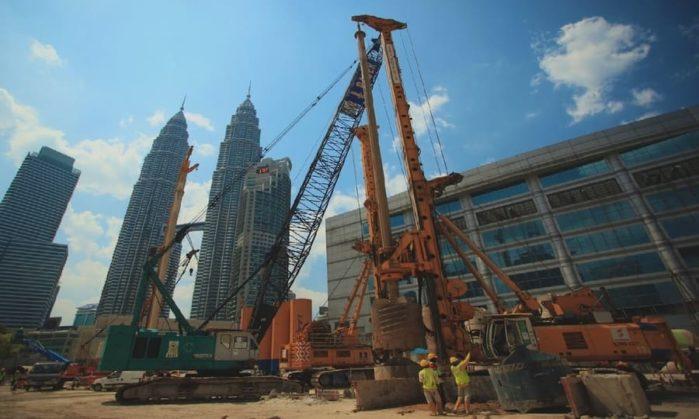
Pile foundation is a profound foundation which can be made up of steel, concrete, and timber. Did you know that the pile length is nearly four times its width? Piles can usually be found in the deep interiors of the ground. The primary advantages of a pile foundation are: It helps in high load capacities and provides resistance from corrosion. In terms of disadvantages, you can say that the pile foundation consists of acids that can damage the concretes and might even result in salt water reactions.


In the forthcoming sections of this write-up, we have provided comprehensive information on the pile foundation. We promise after reading this content piece, you will be able to determine whether you need it in your future constructions. Let’s start with the uses of a pile foundation.


It is quite useful to transfer load from superstructures. In case there is soil on it, you cannot keep the building vaccinated on it. This is where the pile foundation comes in handy. It is usually cost-effective in comparison to other proposed methods. You can use it in case a high groundwater table exists under the structure. You can even employ it when the soil is very loose, and it is not advisable to dig the land to the requisite depth.

Comprehensive Guide on Pile Foundation


Piles

Now, that you have understood the uses of it, in the next section, we will concentrate on different types of pile foundation.

Comprehensive Guide on Pile Foundation

The pile foundation can be divided into three types.

  1. Driven
  2. Cast-in-situ
  3. Driven and cast-in-situ

The question is, how to use piles? Let’s try and figure out an answer to this question. During the pile foundation, there is a lot of burdens put on the structure. Hence, it requires meticulous work on it. The very first thing that happens is engineers inspecting the soil to determine whether the pile can be driven comfortably in it or not. Every pile consists of the effect of land under it. The job of the engineers is to make a group of the pile and then cover it with the help of the pile cap. The pile cap is nothing but a thick cap made up of concrete, which keeps a check on the group of the pile. It literary works as a base. The entire load is then shifted this column of a cap.

Let’s now look at the way piles are constructed.

Cast-in-Place Piles

  1. Hammering on thin wall steel in the ground.
  2. The tube center gets rid of all the left-over soil.
  3. Lessen the capability of steel in the tube.
  4. Place a wet concrete pile into the tube.


Driven Piles

  1. The pile is created at the first ground level. After this, it is hammered inside the ground.
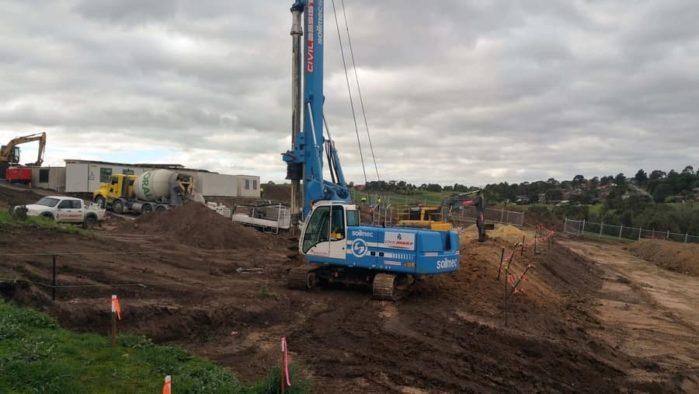
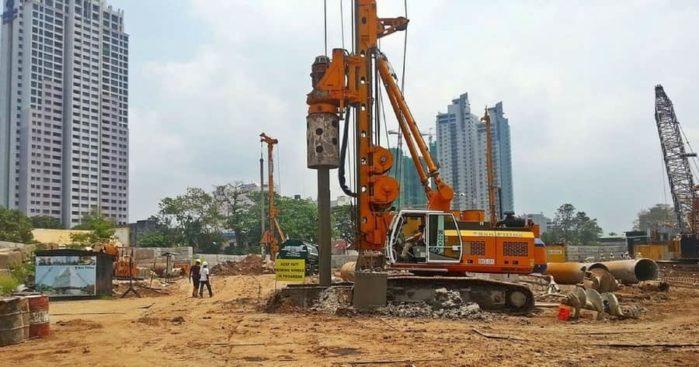
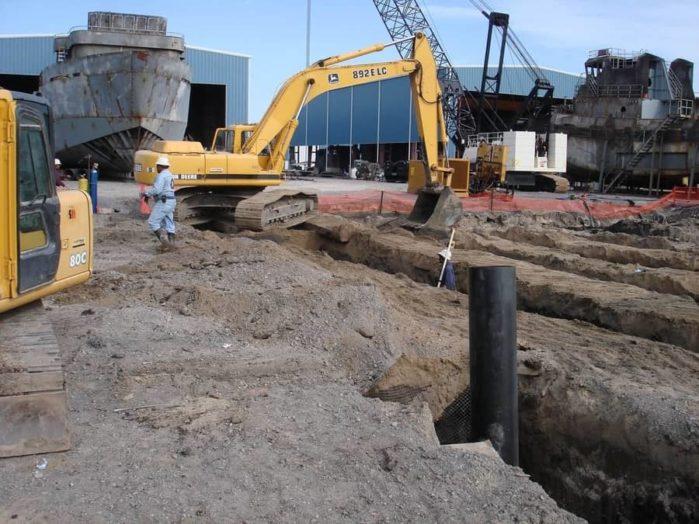
  2. The pile is put into the ground with the aid of a pile driver.
  3. With the help of this machine, it is possible to keep piles vertically straight. Then you can hammer it straight into the ground.
  4. Then you need to hammer it directly into the ground.
  5. A continuous blow is used to insert the pile in the ground.
  6. A steel cap is employed to cover the pile.
  7. With the help of the cap, it is impossible for the pile to get scattered.

Let’s now divert our attention to the advantages and disadvantages of pile foundation.


Advantages of Pile Foundation

  1. It is possible to pre-order the pile based on the specification;
  2. According to the site use, the pile can be pre-made in its size when it comes to length and breadth;
  3. Precast assists in reducing the completion time;
  4. Useful to be installed in large areas;
  5. Useful to be installed in long lengths;
  6. Quite useful in places where it is not possible to drill and make holes;
  7. Pile works in the cleanest and neatest manner.


Disadvantages of Pile Foundation

  1. Easily can be damaged by driving through boulders and stones.
  2. Prone to attacks from marine borers in salt water.
  3. It cannot be above ground level.
  4. Very difficult to gauge the requisite length in advance.
  5. There are chances of vibration when piles are driving that can affect neighboring structures.
  6. To drive the piles, heavy types of equipment are required.
  7. It is not recommended to use a pile for low drainage.

Now that you have seen the advantages and disadvantages of pile foundation, in the next section we will discuss the advantages and disadvantages of different types of piles.
Comprehensive Guide on Pile Foundation

Pile Foundation Types


There are mainly three types of piles:

  1. Timber pile
  2. Concrete Piles
  3. Driven and cast-in-place concrete piles

Driven and cast-in-place concrete piles can further be divided into two types.

  1. Bored and cast-in-place (non-displacement piles)
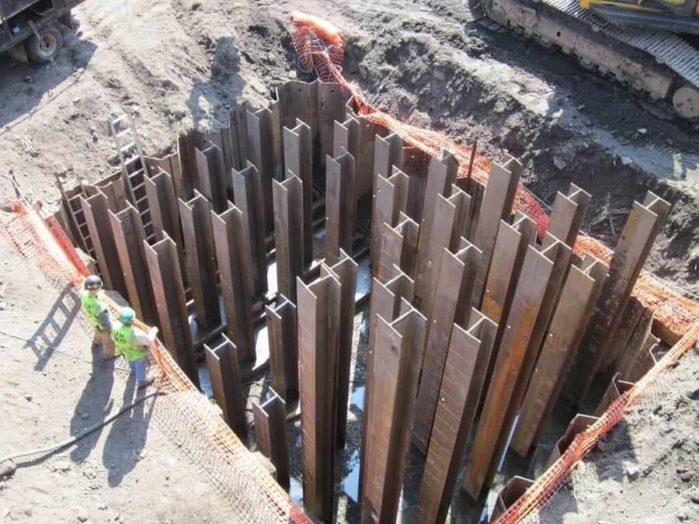
  2. Steel piles (rolled steel section)

Let’s look at the advantages and disadvantages of each of these pile foundations.


1. Timber Piles

Advantages

  1. Very effortless to handle;
  2. Cost-effective in comparison to others because timber is available in abundance;
  3. It is quite easy to combine the sections, which ultimately results in quickly getting rid of the length of the exercise.

Disadvantages

  1. Not found above the groundwater level;
  2. Breaks down when driven by boulders and stones.


2. Concrete Piles

Advantages

  1. Does not scrape;
  2. Cost-effective when compared to others;
  3. Inspection of concrete quality is done before driving;
  4. It is possible to conduct the operation in long length;
  5. Quickly moved above the ground level.

Disadvantages

  1. Very difficult to cut when compared to others;
  2. Prone to breaking while driving;
  3. May require replacement pile;
  4. The trouble with sound and vibrations on an occasional basis;
  5. Not possible to drive with a large diameter.


3. Driven and Cast-in-Place Concrete Piles
Comprehensive Guide on Pile Foundation

Foundation Repair

Advantages

  1. Effortless inspection of casting or can easily extend to the deprived length;
  2. Cost-effective when compared to others;
  3. Very low noise-level;
  4. Very easy to adjust the length;

Disadvantages

  1. Expensive;
  2. Not possible to be driven where headroom is limited;
  3. Results in pre-order concrete damage as a result of hard driving;
  4. Displacement of close retaining walls.


4. Broad and Cast-in-Place (Non-Displacement Pile)

Advantages

  1. Possible to put it with a large diameter;
  2. Likely to put it with long length;
  3. No risk to land;
  4. Possible to insert it in low headroom conditions;

Disadvantages

  1. Concrete cannot be found inside the idyllic condition;
  2. Not possible to expand above ground levels;
  3. The enlarged end cannot be made in harmless material without exclusive techniques;


5. Steel Piles (Rolled Steel Section)
Comprehensive Guide on Pile Foundation

Home Foundation

Advantages

  1. It is possible to cut the piles comfortably and handled as per your specific requirements;
  2. Likely to have very hard driving with long length;
  3. Easily carry a heavy load;
  4. Successful placement of the anchor in sloping edges rock.

Disadvantages

  1. Expensive when compared to other methods;
  2. The pile will scrape;
  3. Easily can be moved during driving.

Concluding Thoughts

Pile foundation is an essential part of architecture. In this write-up, we have provided a comprehensive overview of different aspects of pile foundation. We hope now you will be able to utilize a pile foundation in the best possible manner for your construction site. To read more such exciting write-ups on architecture, keep following architectures ideas, your ultimate knowledge bank providing the latest information on residential and commercial house plans and designs.

Una guía completa sobre cimentación con pilotes | Ilustración muy útil para todos


abc news

Pilotes de cimentación Definición, tipos, usos, ventajas e inconvenientes

Comprehensive Guide on Pile Foundation

Cimentación por pilotes

Cimentación por pilotes es una cimentación profunda que puede ser de acero, hormigón y madera. ¿Sabía que la longitud de un pilote es casi cuatro veces su anchura? Los pilotes suelen encontrarse en el interior profundo del terreno. El principal ventajas de una cimentación sobre pilotes son: Ayuda en altas capacidades de carga y proporciona resistencia a la corrosión. En cuanto a las desventajas, se puede decir que el cimentación por pilotes se compone de ácidos que pueden dañar los hormigones e incluso provocar reacciones salinas.


En las próximas secciones de este escrito, hemos proporcionado información exhaustiva sobre la pila fundación. Le prometemos que después de leer este artículo podrá determinar si lo necesita en sus futuras construcciones. Empecemos por los usos de una cimentación sobre pilotes.


Es muy útil para transferir la carga de las superestructuras. En caso de que haya tierra encima, no se puede mantener el edificio vacunado sobre ella. Aquí es donde el pila fundación resulta muy útil. Suele ser rentable en comparación con otros métodos propuestos. Se puede utilizar en caso de que exista un nivel freático elevado bajo la estructura. Incluso puede emplearlo cuando el suelo está muy suelto y no es aconsejable excavar el terreno hasta la profundidad requerida.


Comprehensive Guide on Pile Foundation


Pilas

Ahora que ya ha comprendido sus usos, en la siguiente sección nos centraremos en los distintos tipos de cimentación sobre pilotes.

Guía completa sobre cimentación con pilotes

En cimentación por pilotes can be divided into three types.

  1. Impulsado
  2. Colado in situ
  3. Accionado y fundido in situ

La pregunta es: ¿cómo utilizar las pilas? Intentemos responder a esta pregunta. Durante la cimentación por pilotes, la estructura soporta muchas cargas. Por eso requiere un trabajo meticuloso. Lo primero que hacen los ingenieros es inspeccionar el suelo para determinar si el pilote puede clavarse cómodamente en él o no. Cada pilote depende del efecto del terreno que tiene debajo. El trabajo de los ingenieros consiste en agrupar el pilote y luego cubrirlo con la ayuda del encepado. El encepado no es otra cosa que un grueso encepado de hormigón que controla el grupo del pilote. Funciona literariamente como base. Toda la carga se desplaza entonces este columna de una tapa.

Veamos ahora cómo se construyen los pilotes.

Pilotes in situ

  1. Martilleo en acero de pared delgada en el suelo.
  2. El centro del tubo se deshace de toda la tierra sobrante.
  3. Disminuir la capacidad del acero en el tubo.
  4. Coloque una pila de hormigón húmedo en el tubo.


Pilotes hincados

  1. El pilote se crea en el primer nivel del suelo. Después de esto, se martilla dentro del suelo.
  2. El pilote se introduce en el suelo con la ayuda de un martinete.
  3. Con la ayuda de esta máquina, es posible mantener los pilotes verticalmente rectos. A continuación, puede martillar directamente en el suelo.
  4. Luego hay que clavarla directamente en el suelo.
  5. Se utiliza un golpe continuo para insertar el pilote en el suelo.
  6. Se emplea un encepado de acero para cubrir el pilote.
  7. Con la ayuda del tapón, es imposible que la pila se disperse.

Centrémonos ahora en las ventajas e inconvenientes de la cimentación sobre pilotes.


Ventajas de la cimentación sobre pilotes

  1. Es posible encargar por adelantado la pila en función de las especificaciones;
  2. Según el uso de la obra, la pila puede ser prefabricada en su tamaño en cuanto a longitud y anchura;
  3. Los prefabricados ayudan a reducir el plazo de ejecución;
  4. Útil para instalar en grandes superficies;
  5. Útil para ser instalado en grandes longitudes;
  6. Muy útil en lugares donde no es posible taladrar y hacer agujeros;
  7. Apila los trabajos de la forma más limpia y ordenada.


Desventajas de la cimentación sobre pilotes

  1. Se puede dañar fácilmente al conducir a través de cantos rodados y piedras.
  2. Propenso a los ataques de barrenadores marinos en agua salada.
  3. No puede estar por encima del nivel del suelo.
  4. Es muy difícil calcular de antemano la duración necesaria.
  5. Al hincar los pilotes pueden producirse vibraciones que afecten a las estructuras vecinas.
  6. Para hincar los pilotes se necesita maquinaria pesada.
  7. No se recomienda utilizar una pila para baja drenaje.

 Ahora que ha visto las ventajas e inconvenientes de cimentación por pilotes, En la siguiente sección analizaremos las ventajas e inconvenientes de los distintos tipos de pilotes.

Comprehensive Guide on Pile Foundation

Tipos de cimentación con pilotes


Existen principalmente tres tipos de almorranas:

  1. Pilote de madera
  2. Pilotes de hormigón
  3. Pilotes de hormigón hincados y moldeados in situ

Los pilotes de hormigón hincados y colados in situ pueden dividirse a su vez en dos tipos.

  1. Pilotes perforados y colados in situ (pilotes sin desplazamiento)
  2. Pilotes de acero (sección de acero laminado)

Veamos la ventajas y desventajas de cada uno de estos cimentación sobre pilotes.


1. Pilotes de madera

Ventajas

  1. Muy fácil de manejar;
  2. Rentable en comparación con otros porque la madera está disponible en abundancia;
  3. Es bastante fácil combinar las secciones, lo que, en última instancia, permite eliminar rápidamente la duración del ejercicio.

Desventajas

  1. No se encuentra por encima del nivel freático;
  2. Se rompe al ser empujado por cantos rodados y piedras.


2. Pilotes de hormigón

Ventajas

  1. No raspa;
  2. Rentable en comparación con otros;
  3. La inspección de la calidad del hormigón se realiza antes de la conducción;
  4. Es posible realizar la operación a gran longitud;
  5. Se desplazó rápidamente por encima del nivel del suelo.

Desventajas

  1. Muy difícil de cortar en comparación con otros;
  2. Propenso a romperse mientras conduce;
  3. Puede requerir pila de recambio;
  4. El problema con el sonido y las vibraciones de forma ocasional;
  5. No es posible conducir con un diámetro grande.


3. Pilotes de hormigón hincados y vaciados en obra

Comprehensive Guide on Pile Foundation

Reparación de cimientos

Ventajas

  1. Inspección sin esfuerzo de la colada o puede extenderse fácilmente a la longitud privada;
  2. Rentable en comparación con otros;
  3. Nivel de ruido muy bajo;
  4. Muy fácil de ajustar la longitud;

Desventajas

  1. Caro;
  2. No se puede conducir donde el espacio libre es limitado;
  3. Provoca daños en el hormigón como consecuencia de la conducción brusca;
  4. Desplazamiento de muros de contención cercanos.


4. Pilotes anchos y colados in situ (sin desplazamiento)

Ventajas

  1. Se puede poner con un diámetro grande;
  2. Es probable que lo ponga con longitud larga;
  3. Sin riesgo para la tierra;
  4. Posibilidad de insertarlo en condiciones de poca altura;

Desventajas

  1. No se puede encontrar hormigón dentro de la condición idílica;
  2. No es posible ampliar por encima del nivel del suelo;
  3. El extremo ampliado no puede fabricarse en material inocuo sin técnicas exclusivas;


5. Pilotes de acero (sección de acero laminado)

Comprehensive Guide on Pile Foundation

Fundación Home

Ventajas

  1. Es posible cortar las pilas cómodamente y manipularlas según sus necesidades específicas;
  2. Es probable que la conducción sea muy dura y larga;
  3. Lleva fácilmente una carga pesada;
  4. Colocación satisfactoria del anclaje en roca de cantos inclinados.

Desventajas

  1. Caro en comparación con otros métodos;
  2. La pila raspará;
  3. Se puede mover fácilmente durante la conducción.

Reflexiones finales

La cimentación sobre pilotes es una parte esencial de la arquitectura. En este artículo, hemos proporcionado una visión general de los diferentes aspectos de la cimentación sobre pilotes. Esperamos que ahora pueda utilizar una cimentación sobre pilotes de la mejor manera posible para su obra. Para leer más artículos interesantes sobre arquitectura, siga leyendo ideas arquitectónicas, su último banco de conocimientos con la información más reciente sobre planos y diseños de viviendas residenciales y comerciales.