

An old fireplace often becomes the room’s centerpiece for the wrong reasons. It looks dated, barely produces heat, and quietly drafts cold air into the house more than it warms it. Renovating a fireplace can fix all of that, but it involves more decisions than most homeowners expect going in. Here’s what to consider before starting the project, from the initial inspection through the final finishing touches.
Signs Your Fireplace Is Ready for an Upgrade
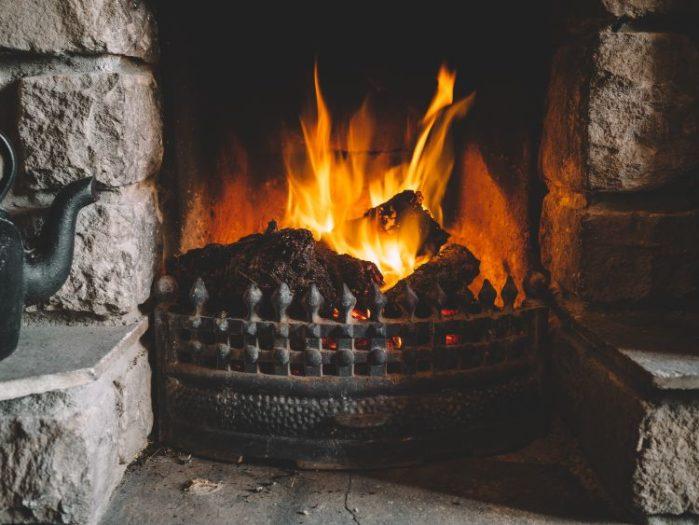
A few common signs point toward a fireplace that’s overdue for a renovation. Visible cracks in the firebox or surrounding masonry, a chimney that smells musty or smoky even when the fireplace isn’t in use, and a noticeable draft coming from the fireplace opening are all worth taking seriously. So is a fireplace that simply doesn’t produce enough heat to justify using it, which is extremely common in older, traditional open-hearth designs that lose most of their heat straight up the chimney.
Cosmetic wear matters too. Dated brick, a chipped or discolored mantel, or a fireplace that clashes with an otherwise updated room are all valid reasons to renovate, even if the fireplace itself is technically still functional. A fireplace that’s rarely used because it doesn’t fit the room anymore is arguably in just as much need of attention as one with a genuine mechanical problem.
Inspect Before You Renovate
Before any cosmetic or functional work begins, a professional chimney and fireplace inspection is worth scheduling. Creosote buildup, structural cracks, and damaged flue liners aren’t always visible from a casual glance, and starting a renovation without knowing the full condition of the chimney can lead to expensive surprises partway through the project.
This step matters even more for homes with a fireplace that hasn’t been used or serviced in years. An inspection establishes a clear starting point and helps determine whether the project is a simple cosmetic refresh or something that requires more significant structural work first, which changes both the budget and timeline considerably.
Choosing an Insert vs. a Full Rebuild
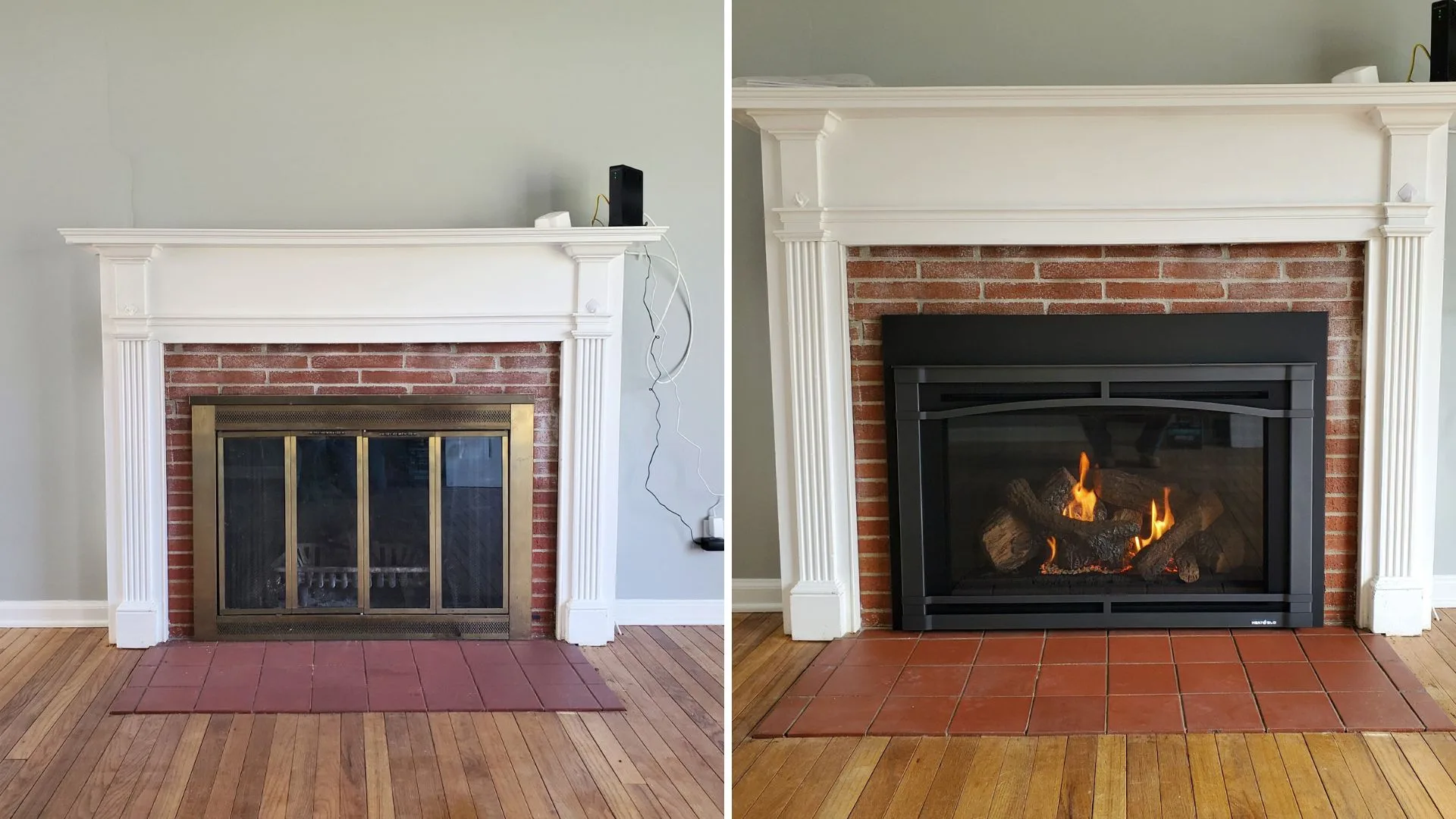
Most fireplace renovations fall into one of two categories: installing an insert into the existing opening, or a more involved rebuild of the firebox and surround. Inserts are the more common and budget-friendly route, since they work within the existing masonry structure rather than requiring it to be torn out. A gas, wood, pellet, or electric insert can dramatically improve both the efficiency and appearance of an old fireplace without the cost or disruption of a full rebuild.
A full rebuild makes more sense when there’s significant structural damage, or when a homeowner wants to change the fireplace’s size, shape, or location entirely. This route costs considerably more and typically requires permits and a longer construction timeline. For most homeowners dealing with an old but structurally sound fireplace, an insert offers the better balance of cost, disruption, and results.
Matching the Insert to Your Home’s Heating Needs
Not every insert type suits every home. Homes that want to keep the experience of a real wood fire, while gaining significantly better efficiency, often do well with a wood-burning insert, which retrofits an old, inefficient fireplace into a much more effective heat source without losing the character of a genuine wood fire. Gas and pellet inserts appeal more to homeowners prioritizing convenience and consistent heat output, while electric inserts work well in homes without an existing chimney or gas line, or for anyone who wants the visual ambiance without the maintenance that comes with combustion.
Updating the Surround and Mantel
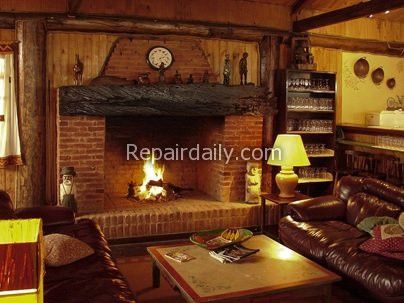
The surround and mantel play a bigger role in a fireplace’s overall look than the firebox itself in a lot of cases. Swapping outdated tile, brick, or stone for a more current material, or refinishing existing masonry with paint or a whitewash, can transform the entire feel of a fireplace without touching the mechanics underneath. A new mantel shelf, whether reclaimed wood, a clean modern floating design, or a custom stone surround, often ends up being the single most noticeable change in the finished project.
Permits and Code Considerations
Depending on the scope of the renovation, permits may be required, particularly for anything involving a change in fuel type, venting modifications, or structural changes to the firebox or chimney. Local codes also dictate clearance requirements between combustible materials and the firebox opening, which matters if a renovation involves adding a new mantel, built-ins, or trim near the fireplace. Skipping this step isn’t just a compliance risk. It’s also a genuine safety issue that’s worth taking seriously rather than assuming an old fireplace’s original clearances still meet current code.
Budgeting for a Fireplace Renovation
Costs vary widely depending on scope. A cosmetic refresh, new mantel, paint, and minor surround updates, sits at the lower end of the budget range. Installing an insert into an existing opening costs more but remains far less expensive than a full rebuild, which involves demolition, new masonry work, and potentially structural modifications. Getting quotes for each approach before committing helps set realistic expectations for both cost and timeline.
Working With a Professional
Fireplace renovations sit at the intersection of aesthetics, structural work, and combustion safety, which makes this a project where professional input pays off. A qualified fireplace specialist can assess the existing structure, recommend the right insert or rebuild approach for a home’s specific situation, and ensure any venting or clearance requirements are met correctly the first time. Getting this right from the start avoids the cost and hassle of correcting mistakes after the project is already finished.
Final Thoughts
An old, underperforming fireplace doesn’t have to stay that way. Whether the right fix is a simple insert, a cosmetic refresh of the surround, or a more involved rebuild, understanding the condition of the existing structure and matching the renovation to a home’s actual heating needs leads to a result that’s both more efficient and more enjoyable to actually use.
Taking the time to plan the project properly, rather than rushing into a cosmetic fix that ignores an underlying structural issue, tends to produce a fireplace that holds up for decades rather than needing attention again in just a few years.