

Key Takeaways
- Choose upgrades around how, where, and how often you drive in Cary and the Triangle.
- Window film, paint protection film, ceramic coatings, and detailing each address different needs.
- North Carolina tint rules should be confirmed before selecting a shade or scheduling installation.
- Wheels, tires, interior protection, and electronics can improve daily comfort as much as exterior upgrades.
- Installation quality and routine aftercare strongly affect long-term results.
Cary drivers deal with humid summers, bright sunshine, seasonal pollen, construction debris, busy commutes on U.S. 1 and I-40, and weekend trips across North Carolina. Those conditions make vehicle upgrades more than an appearance decision. Whether the goal is cooler cabin comfort, simpler wash days, or better protection from highway debris, ceramic coating for cars in Cary, NC, can be part of a plan tailored to how a vehicle is actually used.
The best plan is rarely the largest package. A family SUV parked outside near downtown Cary has different priorities than a luxury sedan driven daily to Raleigh, or a truck that regularly carries equipment around Wake County. Start by asking one simple question: what problem should this upgrade solve?
Start With the Vehicle’s Main Needs
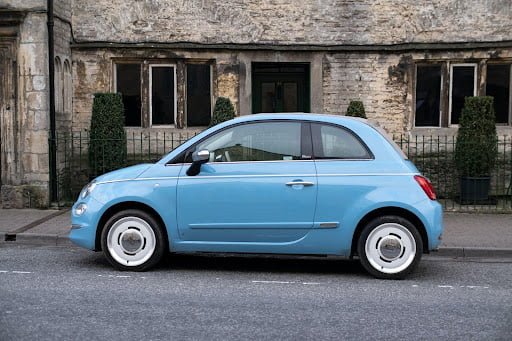
Daily commuters may prioritize glare reduction, cabin comfort, and front-end protection. Family vehicles often benefit from easy-clean interior surfaces, cargo liners, and stain resistance. Performance cars may need protection for low front bumpers, rocker panels, and wide tires. In contrast, work trucks and SUVs may need durable floor protection, practical electronics, and tire setups suited to regular loading.
Outdoor parking, frequent highway driving, gravel access roads, pets, children, and high annual mileage all change the value of an upgrade. For Cary residents comparing services after a pollen-heavy spring or a hot summer, searching for automotive ceramic coating near me should prompt questions about paint condition, maintenance habits, and whether impact protection is also needed.
Window Film: Comfort, Glare Reduction, and Privacy
Window film can reduce glare, improve privacy, and help manage solar heat entering the cabin. Visible light transmission, often called VLT, describes how much light passes through the glass and film together. A lower VLT number means a darker final appearance, but darker film does not automatically provide stronger heat rejection.
Dyed film is generally selected for appearance and basic glare reduction. Carbon film can offer a richer look without the signal concerns associated with some metallic products. Metallic film may provide heat performance, but it can interfere with certain electronic signals. Ceramic film is commonly chosen when drivers want high heat rejection without relying on a very dark shade.
Check North Carolina Tint Rules First
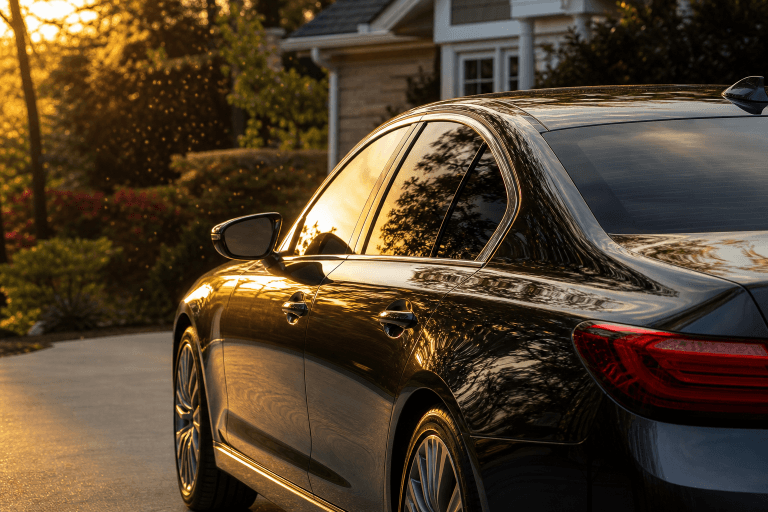
State requirements matter because factory glass and aftermarket film are measured together. According to North Carolina window-tint requirements, after-factory tint may not measure darker than 32 percent with a North Carolina-approved meter. As of December 1, 2025, tint checks are no longer part of the state safety inspection, but the underlying tint law still applies. The windshield tint area also has limits, so verify the current rules before installation.
- Ask for the expected final meter reading, not just the film percentage.
- Confirm the factory glass tint value on every window.
- Review the windshield strip placement before work begins.
- Keep product and installation paperwork with vehicle records.
Paint Protection Film for High-Impact Areas
Paint protection film, often called PPF, is a clear layer applied to painted panels that are subject to frequent impacts. It can help reduce damage from small rock chips, road debris, light scratches, bug residue, and other surface hazards. Cary drivers who regularly travel the Triangle’s major roads may find the front bumper, hood edge, mirrors, front fenders, and rocker panels especially worthwhile areas to protect.
Coverage can be as focused as a bumper-only installation or as extensive as a full vehicle wrap. Partial-front and full-front packages are often practical middle choices. Rather than automatically choosing maximum coverage, match the package to where the vehicle sees damage. A weekend garage-kept car and a daily driver that follows construction traffic have very different risk profiles.
Ceramic Coatings and Detailing for Easier Surface Care
A ceramic coating bonds to a properly prepared exterior surface and can create a smoother, glossier finish that sheds water more easily and reduces the tendency for grime to cling. It can make regular cleaning more manageable during Cary’s pollen season and after rainy commutes. It is not, however, a substitute for PPF when the main concern is rock chips or impact damage.
Older vehicles may need paint correction before coating to address swirls, oxidation, and embedded contamination. Detailing is also the foundation for every protection plan because clean, well-prepared surfaces allow products to perform as intended. Coated vehicles still need safe washing methods and periodic inspections.
Interior Protection, Wheels, Tires, and Electronics
Interior care deserves equal attention, particularly for family vehicles and outdoor-focused drivers. Fabric protection, leather or vinyl conditioning, UV-conscious cleaners, floor liners, cargo mats, regular vacuuming, and quick spot treatment can preserve the surfaces people touch every day. Window film can improve cabin comfort, but it does not replace normal personal sun protection. The sun-safety habits recommended for daily exposure still include practical measures such as sunscreen, clothing, and shade.
Wheels and tires affect ride quality, handling, braking feel, road-noise levels, and clearance. Before changing sizes, confirm brake clearance, tire diameter, speedometer effects, load rating, and sidewall height for local road conditions. A thin tire sidewall may look sharp, but it can be less forgiving around potholes and rough pavement.
Useful electronic upgrades include backup cameras, dash cameras, remote start, hands-free audio, speaker improvements, and amplifiers. Any electrical work should protect factory safety systems, avoid obstructing airbags or sensors, and use clean, secure wiring.
How to Build a Smart Upgrade Plan
- Identify the main problem. Heat, glare, chips, stains, poor audio, or difficult cleanup.
- Rank frequent and expensive risks. Prioritize damage that happens often or costs the most to repair.
- Choose one high-value service first. Add layers only when each one has a clear purpose.
- Ask detailed installation questions. Confirm product type, coverage, preparation, edge work, warranties, and aftercare.
- Maintenance plan. Protection lasts longer when the vehicle is washed, inspected, and properly cared for.
Conclusion
For drivers in Cary, North Carolina, a thoughtful vehicle upgrade plan should reflect local weather, parking conditions, commuting patterns, and family or work demands. Window film can enhance comfort, PPF can protect vulnerable paint, ceramic coatings can simplify surface care, and practical interior, wheel, tire, or electronic upgrades can make every trip more enjoyable. Clear priorities, legal awareness, and careful installation are the combination that delivers lasting value.