

Knives have a long history as practical tools, outdoor equipment, and collectible objects. Among the many modern knife designs, OTF knives and butterfly knives stand out because of their distinctive mechanisms, construction, and visual appeal.
For collectors, outdoor enthusiasts, hobbyists, and businesses working in the knife industry, understanding the differences between these designs can make it easier to choose the right type for a particular purpose. This guide explores the basic characteristics of OTF and butterfly knives, their materials, construction, customization options, and important legal and safety considerations.
What Is an OTF Knife?
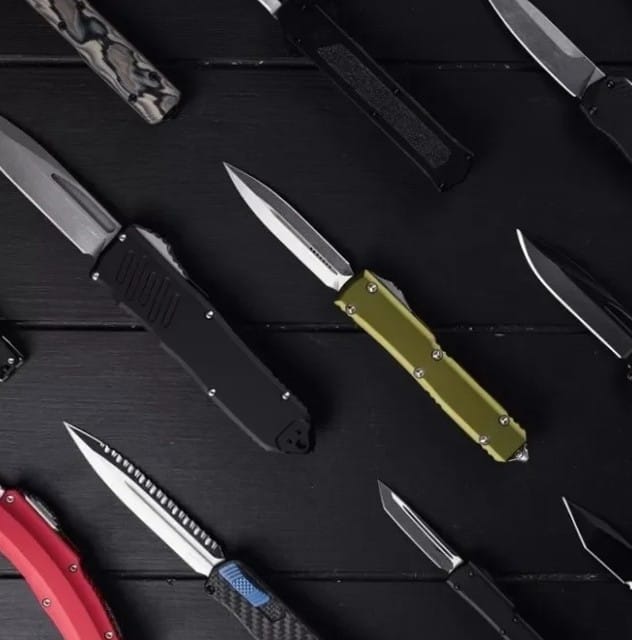
OTF stands for Out-The-Front. Unlike a traditional folding knife, an OTF knife has a blade that travels through an opening at the front of the handle.
OTF knives are known for their compact design and mechanical construction. Depending on the model, the mechanism can allow the blade to move in one or both directions.
The design is particularly interesting to knife enthusiasts because it combines a relatively compact handle with a mechanical blade system.
According to OTF Factory, the company focuses on OTF, automatic, and butterfly knives and provides manufacturing and OEM/ODM services for knife brands.
What Is a Butterfly Knife?
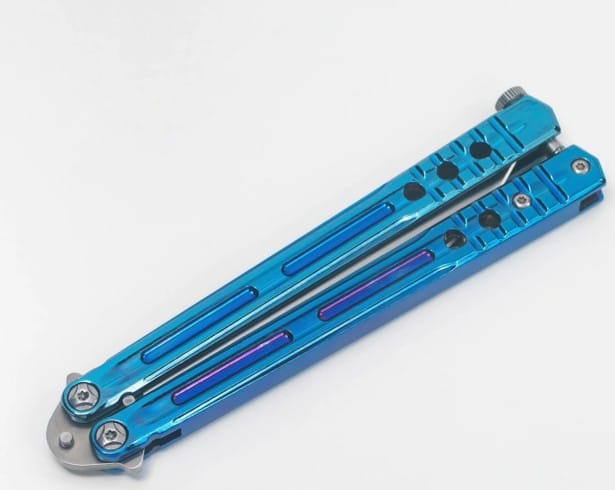
A butterfly knife, also called a balisong, uses two handles that rotate around the blade. When closed, the handles cover the blade, creating a compact package.
Butterfly knives have developed a strong following among collectors and hobbyists because of their distinctive construction. The two-handle design also makes the knife visually different from conventional folding knives.
From a manufacturing perspective, the pivot system, handle materials, blade construction, and overall balance are important parts of the design.
OTF Knives vs. Butterfly Knives
Although both are specialized knife designs, OTF and butterfly knives work in very different ways.
| Feature | OTF Knife | Butterfly Knife |
| Basic design | Blade travels through the front of the handle | Blade rotates between two handles |
| Common name | Out-The-Front | Balisong |
| Main design feature | Internal mechanical mechanism | Pivoting handles |
| Collector appeal | Mechanical engineering | Unique construction and balance |
| Handle design | Usually one-piece chassis | Two separate handles |
| Customization | Blade, handle, finish, materials | Blade, handles, pivots, materials |
The best choice depends on the collector’s interests, intended use, local regulations, and personal preferences.
Materials Used in Modern Knives
Materials have a major influence on the appearance, durability, weight, and price of a knife.
Blade Materials
Knife manufacturers may use different types of stainless and tool steels. Common examples include:
- D2 steel
- 440-series stainless steel
- M390
- S35VN
- Damascus-style materials
Different steels have different properties, including corrosion resistance, edge retention, hardness, and ease of maintenance.
OTF Factory states that its manufacturing capabilities include steels such as M390, S35VN, and D2 for different product requirements.
Handle Materials
Knife handles can also be produced from a variety of materials. Aluminum, titanium, stainless steel, and composite materials are commonly associated with modern knife construction.
For example, manufacturers may use CNC-machined aluminum or titanium handles when creating premium or customized knife designs.
What Makes a Custom Butterfly Knife Different?
Customization is an important part of the modern knife hobby. Collectors and brands may want a particular combination of materials, finishes, dimensions, colors, or branding.
A custom butterfly knife can be designed around a specific aesthetic or manufacturing requirement. Customization may involve elements such as:
- Handle material
- Surface finish
- Blade finish
- Handle color
- Engraving
- Branding
- Hardware
- Packaging
- Overall visual design
For businesses, customization can also be part of an OEM or private-label strategy. OTF Factory describes OEM and ODM services that can include custom CNC-machined handles, selected blade steels, and product development support.
Why Knife Collectors Like Specialized Designs
Knife collecting is not only about owning different blades. Many enthusiasts are interested in engineering, materials, craftsmanship, history, and design.
Specialized knives such as OTF and butterfly models can be particularly interesting because their construction differs from ordinary folding knives.
Collectors may compare knives based on:
1. Construction Quality
A well-made knife should have consistent machining, clean finishing, properly fitted components, and good overall build quality.
2. Materials
Blade steel and handle materials can significantly affect the characteristics of a knife.
3. Finish
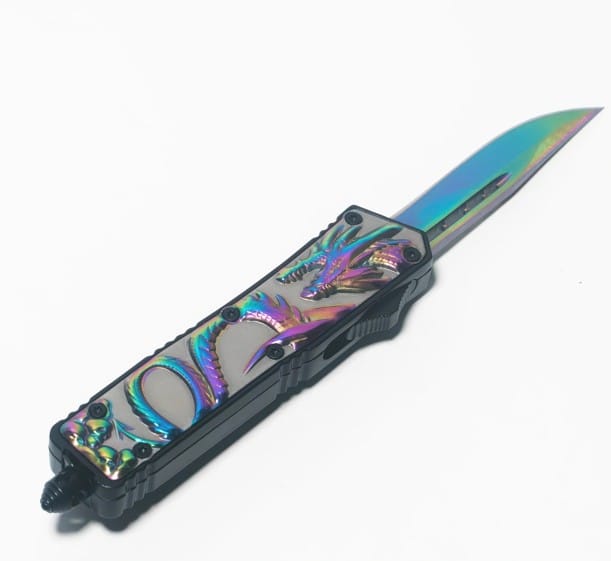
Different coatings, textures, anodized finishes, and surface treatments can create very different appearances.
4. Design
Some collectors prefer minimalist designs, while others look for unusual handles, decorative patterns, or distinctive blade shapes.
5. Brand Customization
Businesses may want their own logos, colors, packaging, or product specifications when developing a private-label knife line.
Manufacturing Quality Matters
Precision is especially important for knives with moving mechanical components.
OTF Factory describes a multi-stage quality-control process involving material verification, CNC machining checks, heat treatment, assembly inspection, and final testing.
For butterfly knives, precision around the pivot system is particularly important because the handles and blade are connected through moving hardware.
For OTF knives, internal components and the blade track require accurate manufacturing because the design depends on a compact mechanical system.
This is one reason experienced knife manufacturers can be valuable to retailers and brands looking for consistent production.
Customization for Knife Brands
Customization is not limited to individual collectors. Knife companies can also work with manufacturers to develop products that match their own brand identity.
A custom manufacturing project might involve:
- Choosing blade steel
- Selecting handle materials
- Developing a unique handle design
- Creating a specific finish
- Adding a company logo
- Designing packaging
- Selecting production quantities
- Developing samples before larger production
OTF Factory advertises factory-direct OEM and ODM services and flexible minimum-order options for businesses.
This approach can be useful for retailers that want a knife design that is different from standard catalog products.
OTF and Butterfly Knives for Outdoor Enthusiasts
Knives are commonly associated with outdoor activities such as camping, hiking, fishing, and general field use. However, the right knife depends on the actual task.
For outdoor applications, buyers should consider:
- Blade durability
- Corrosion resistance
- Handle comfort
- Overall size
- Weight
- Ease of maintenance
- Local knife laws
- Storage and transportation requirements
A specialized knife should always be treated as a sharp tool rather than a toy. Proper storage and responsible handling are especially important when knives are carried outdoors.
Knife Laws and Regulations
One of the most important considerations when buying, carrying, importing, or transporting an OTF or butterfly knife is local law.
Knife regulations can vary significantly between countries, states, provinces, and cities. Some jurisdictions place restrictions on particular knife mechanisms, blade lengths, carrying methods, or possession.
Before purchasing or transporting an OTF or butterfly knife, check the current laws that apply to your location. The fact that a particular knife is legal in one place does not mean it is legal to carry or possess somewhere else.
For businesses, import and export requirements should also be reviewed before placing an order.
Safety and Responsible Ownership
Regardless of the knife design, responsible ownership should come first.
Knives should be stored securely and kept away from children and anyone who is not authorized to handle them. They should also be transported in accordance with applicable laws and regulations.
Collectors should avoid treating knife mechanisms as toys or using them in ways that could cause injury. A safe storage system and careful maintenance can help reduce unnecessary accidents.
Choosing Between OTF and Butterfly Designs
There is no single best knife design for every enthusiast.
An OTF knife may appeal to someone who is interested in compact mechanical engineering and the distinctive Out-The-Front format.
A butterfly knife may be more attractive to someone interested in traditional balisong construction, pivot systems, handle design, and collecting.
For either type, focus on:
- Build quality
- Materials
- Manufacturer reputation
- Intended purpose
- Maintenance requirements
- Local laws
- Safe storage
What to Look for in a Knife Manufacturer
Businesses interested in developing their own knife products should evaluate a manufacturer carefully.
Important questions include:
- Does the manufacturer have its own production facility?
- Can it provide material specifications?
- Does it offer OEM or ODM services?
- Can it produce custom designs?
- What quality-control procedures are used?
- What are the minimum order quantities?
- Can the manufacturer provide samples?
- What branding and packaging options are available?
- Does it provide appropriate documentation for international business?
OTF Factory presents itself as a direct manufacturer specializing in OTF, automatic, and butterfly knives, with CNC machining, OEM/ODM development, and quality-control capabilities.
Final Thoughts
OTF knives and butterfly knives represent two distinctive approaches to modern knife design. Their unique mechanisms, materials, and construction make them popular subjects for collectors, enthusiasts, outdoor communities, and knife brands.
For individual buyers, the most important factors are responsible ownership, product quality, intended purpose, and compliance with local regulations. For businesses, manufacturing capabilities, customization, quality control, and production flexibility are equally important.
If you are researching manufacturers, custom designs, or wholesale knife production, you can learn more about OTF and butterfly knife manufacturing through OTF Factory. Always verify applicable laws and regulations before purchasing, carrying, importing, or transporting any knife.