

Key Takeaways
- Tree roots do not usually break sound pipes; they find their way into joints and cracks that are already leaking moisture.
- Older clay and cast-iron sewer lines are the most vulnerable, and many homes still have them.
- Knowing where your sewer line runs is the first step to planting safely, and utility locate services generally do not mark it.
- Choosing the right species and leaving enough distance from the line matters more than any root barrier.
- Slow drains and gurgling toilets in a home with mature trees are worth investigating early.
Fall is one of the best times of year to plant a tree. The soil is still warm, the air is cooler and roots have months to establish before summer heat returns. It is also the moment when a lot of homeowners make a decision that will affect their plumbing for the next forty years without realizing it: where to put the tree.

Tree roots and sewer lines have a long and expensive history together. With a little planning, a new tree can grow for decades without ever getting near your pipes. Here is what to know before you pick up a shovel.
How Roots Actually Get Into Sewer Lines
A common belief is that roots crush pipes. In most cases, that is not what happens. Roots grow toward water, oxygen and nutrients, and a sewer line carries all three. When a pipe has a small crack or a loose joint, it releases a trace of moisture and warmth into the surrounding soil. Fine roots follow that trail, slip through the opening and, once inside, find an endless supply of water and nutrients. They grow into dense mats that catch grease, paper and debris, which leads to slow drains and eventually backups.
Over time, a root mass can widen the gap it entered through and make the damage worse. But the starting point is almost always a pipe that was already vulnerable.
Which Pipes Are Most at Risk
| Pipe material | Common in | Root risk |
| Clay tile | Many homes built before the 1970s | High. Short sections with many joints give roots plenty of entry points. |
| Cast iron | Older homes, often under and near the house | Moderate. Corrosion and cracking over time create openings. |
| Orangeburg (fiber pipe) | Some homes built from the 1940s to the 1970s | High. The material deforms and deteriorates with age. |
| PVC or ABS plastic | Most newer homes and replaced lines | Low. Fewer joints, and properly glued joints resist intrusion. |
If you do not know what your sewer line is made of, the age of the home is a reasonable first clue, and a sewer camera inspection can confirm it. That inspection also shows whether roots are already in the line, which is useful to know before you add more trees to the yard.
Find Out Where Your Sewer Line Runs
Before planting anything substantial, figure out the path your sewer line takes from the house to the street. Look for a cleanout, usually a capped pipe near the foundation or in the yard, and note where the line exits the basement or crawlspace. A plumber with a camera and a locating tool can trace the line and mark it on the surface.
It is also important to call your state’s 811 utility locate service before digging. That call is often required by law, and it protects you from hitting gas, electric and communication lines. Keep in mind, though, that these services generally mark public utility lines, not private ones. Your sewer lateral, the line between your house and the public main, is usually your responsibility to locate.
Choose the Right Tree for the Right Spot
Root systems spread far wider than most people expect, often well beyond the outer edge of the canopy, and most of a tree’s roots live in the top couple of feet of soil, right where many sewer lines sit. That makes both distance and species important.
- Give large trees the most room. Big shade trees should be planted as far from the sewer line as your yard reasonably allows.
- Be cautious with fast-growing, water-loving species. Willows, poplars, cottonwoods and silver maples are well known for aggressive roots that seek out water.
- Use smaller trees near the line. Ornamental trees with more modest root systems are better suited to tighter spaces.
- Think about the mature size, not the nursery size. A tree that looks small in its container may be 50 feet tall and just as wide in thirty years.
Your local extension office or arboretum is a great resource for species suited to your climate and soil. Root barriers, which are panels installed in the soil to redirect roots, can help in specific situations, but they are not a substitute for good placement.
A Lesson From the Chicago Suburbs
The suburbs west of Chicago offer a clear example of why these matters. The emerald ash borer was first detected in Illinois in Kane County in 2006, and at the time roughly one in five trees in the Chicago area was an ash. The beetle spread quickly, and many villages lost most of their parkway ash trees. Arlington Heights, for example, lost about 10,000 of its 13,000 parkway ash trees. Communities replanted with a wider mix of species, and homeowners replaced ash trees in their own yards.
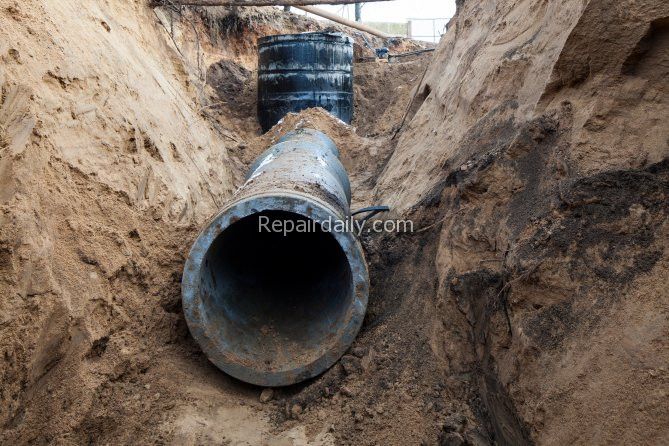
Many of those replacement trees are now well established, and their roots are spreading through the same soil as the region’s older clay sewer laterals. For a homeowner in a suburb like Wheaton, Naperville or Elmhurst who starts noticing slow drains in a house with an older line, a camera inspection is a sensible first step, and a company that handles sewer repair in Chicagoland can explain whether the line needs cleaning, lining or replacement. Many villages also manage the trees in the public parkway, so it is worth checking local rules before planting or removing anything there.
Signs Roots May Already Be in Your Line
If you have mature trees near your sewer line, watch for these early warnings:
- Drains throughout the house that slow down at the same time
- Gurgling sounds from toilets or drains
- Toilets that do not flush as strongly as they used to
- Water backing up into a basement floor drain or the lowest fixture in the house
- Recurring clogs that return weeks after being cleared
- Unusually lush or green patches of lawn along the path of the sewer line
A single slow sink is usually a local clog. When several drains act up at once, the problem is more likely in the main line.
What Happens if Roots Are Found
| Approach | What it does | When it fits |
| Mechanical cutting or hydro jetting | Clears the roots and debris from inside the pipe | Short-term relief; roots usually return |
| Trenchless pipe lining | Creates a new seamless pipe inside the old one, sealing the joints roots used to enter | Lines that are structurally sound enough to line |
| Spot repair | Replaces a damaged section | Damage limited to one area |
| Full replacement | Replaces the line entirely | Collapsed or severely damaged lines |
Cleaning alone treats the symptom. Sealing the entry points is what stops roots from coming back, which is why many homeowners with older lines choose lining or replacement once they have seen the camera footage.
Plant Smart, and Enjoy the Shade
Trees add beauty, shade and value to a home, and none of this is a reason to avoid planting them. It is simply a reason to plant with the whole yard in mind, including the parts you cannot see. Find your sewer line, choose a species that fits the space, give it room to grow and keep an eye on your drains. Your tree and your plumbing can coexist for a very long time.
Sources
University of Illinois Extension, Emerald Ash Borer
Chicago Sun-Times, report on ash tree losses in the suburbs (September 2017)
The Morton Arboretum, emerald ash borer community resources